
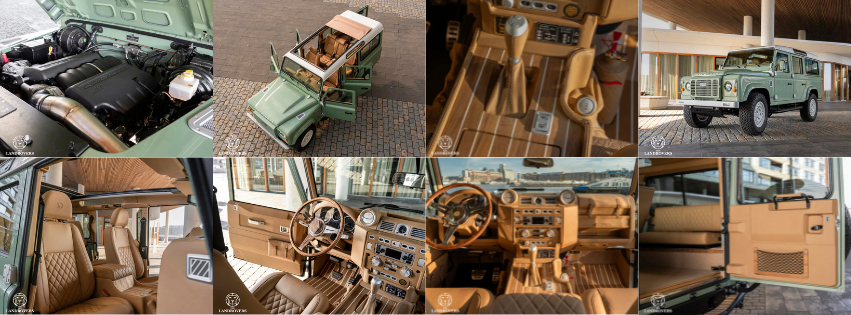
Take a Land Rover Defender, for instance. On the outside, it has the same chunky silhouette we’ve loved for decades. On the inside, companies like The Landrovers have swapped out the old engine for a modern electric drivetrain. The car still climbs hills, wades through streams, and hauls gear - only now it does it silently, with torque that hits the instant you touch the pedal. They can also give your classic a complete interior overhaul: a modern display to check battery charge, freshly conditioned leather seats, and even a fully redesigned dashboard and center console to match the new electric heart.
Or consider a classic Porsche 911 given new life by companies like Revive Automotive in Germany and Northern Europe: classic charm paired with whisper-quiet performance, modern reliability, and even electric A/C to keep the interior comfortable.

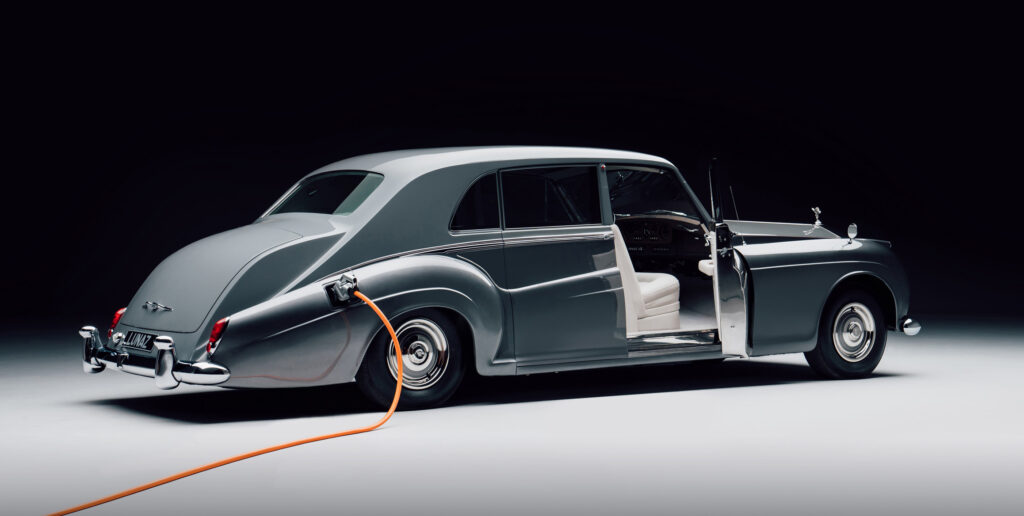
And then there’s Lunaz, turning iconic Jaguars, Rolls-Royces, and Bentleys into bespoke electric masterpieces - heritage and luxury intertwined, with every wire, battery, and leather stitch carefully considered.

EV conversions generally come in three flavors. There’s the kit-based route for the hands-on enthusiast, who wants to swap a small Beetle or Mini for an electric heart and doesn’t mind getting their hands dirty. Then there’s the professional shop conversion, where specialists handle every detail: drivetrain, battery, wiring, brakes, and road-legal certification. Finally, there’s the full restomod: a classic car that emerges from the garage almost unrecognizable in performance and comfort, yet still unmistakably itself. Think of it as a bridge between nostalgia and tomorrow.
Cost, of course, varies wildly. A modest small-car conversion can start around £30,000, enough to make a weekend classic city-ready without breaking the bank. Step up to a daily-driver-friendly build with decent range and modern upgrades, and you’re looking at £60,000 – 90,000. Go full bespoke with rare or luxury models, and six-figure sums aren’t unusual. But in every case, you’re paying for more than parts and labor; you’re paying for craftsmanship, engineering, and the thrill of driving a car that straddles eras.
Range matters too. A compact Beetle or Mini can get by with a 20–30 kWh battery, perfect for weekend jaunts or city cruising. Go bigger - 40–70 kWh - and suddenly your classic becomes a real daily driver. Push past 80 kWh, and you’re in full restomod territory, with weight, cooling, and chassis tweaks carefully engineered to keep the car balanced and fun to drive.
While it’s thrilling to imagine your classic rolling out silently and electric, there are legal boxes to tick, from road-legal inspections to updated registration. The payoff, though, is undeniable: a car that looks like yesterday but drives like tomorrow.
For anyone lucky enough to own a cool classic and facing the privileged dilemma of whether to convert, consider what you really want. A faithful classic that’s now whisper-quiet and low-maintenance? Or a full-blown reinvention that will turn heads on every street? Either way, modern EV tech lets you preserve the magic of the original car while giving it a new lease on life. Cleaner, smoother, and ready for the future.

Photo Copyright: revive-automotive.com, bylunaz.com, the-landrovers.com
Secure your MOTION MAG copy online now!

